Grapevine Stories
Creating wild places that will outlive us all
James Robinson is an organic dairy farmer from the edge of the Lake District. He's passionate about hedges, habitats for nature, becks and education, oh and cows too! As a columnist for Scribehound, James talks about creating wild places that will outlive us all.
As part of Grapevine’s partnership with Scribehound, the digital platform that gives 33 leading rural voices the freedom to discuss the topics that matter the most to the countryside. Grapevine members can feed their passion for the countryside with an original column shared everyday, whilst taking advantage of an exclusive offer of a 3 month free trial and 40% off an annual subscription. Please click here to sign up
As a farmer and landowner, I am in a privileged position to make real difference, but what will my legacy be?
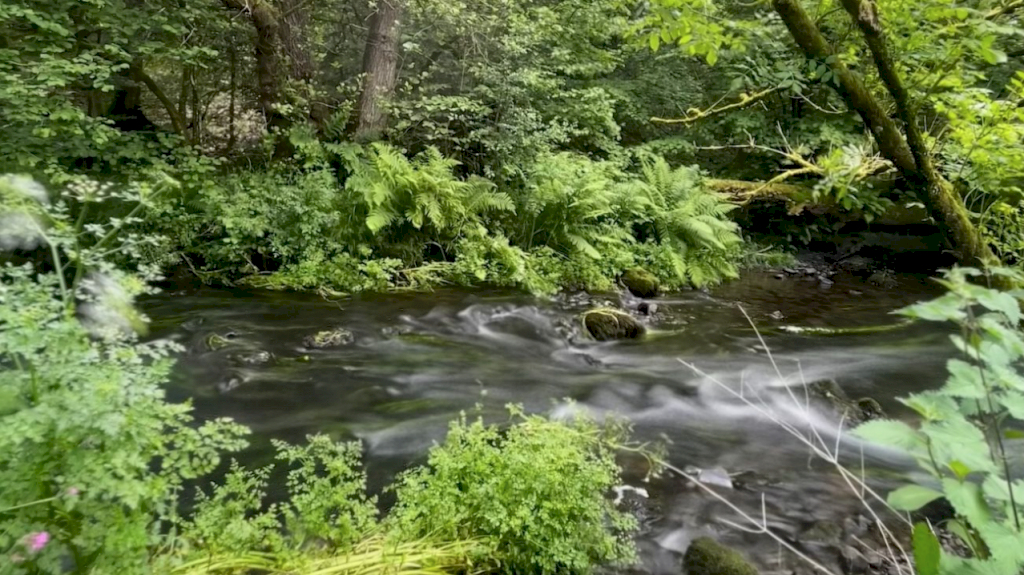
There’s a place I go sometimes. Down by the beck, between our wood and the pond. It doesn’t matter to me what time of year it is, it is always a place I head to. You can sit there on the bank, leaning against an old gnarly alder tree, probably about 6 foot above the water, above where the beck has slowly cut its way through the hard sammely soil down there, at the bottom end of our farm. There’s a carpet of wood anemones growing in early summer and bluebells too. Trout rise to the surface of the pool beneath me to catch the mayflies as they dance across the water, their brief moment in the sunshine ended by a hungry mouth from below.
There was a time when I would’ve sat on top of that bank with a rod in my hands, trying to catch those fish, but the rod has been gathering cobwebs in the shed for decades now, these days I am content with just sitting in quiet admiration.

We don’t spend enough time sitting. Just sitting and watching the life on our farms. Sitting and listening to the birdsong as it changes with the seasons.
It probably all sounds a bit bucolic and maybe a bit self-indulgent, but we need these wins, these moments in a space where the noise and rush of everyday farming can’t reach. And the thing is, farming has played a big part in creating this, so why shouldn’t this farmer enjoy it? It is only really here due to natural processes and a couple of farmers giving nature a leg up, and importantly the space and time to do what it needs.
The ancient Greek saying (or Quaker or Japanese depending on your internet search engine) "A society grows great when old men plant trees in whose shade they know they shall never sit", could well be a slogan for the future of our countryside. Now, I am no spring chicken (the grey fluffy sideburns are an immediate giveaway), but I wouldn’t call myself old either. And yet, the oak trees in a part of our wood that I helped my grandad plant when I was in my late teens, are now 20 feet high and a foot across at the base. I could sit underneath them, in their shade, but my grandad never did. They were still very much thin specimens by the time he died. I remember when a woodland grant chap came round to check on the work, he looked at my grandad and said, “these trees aren’t for you”, and, as he turned to me, “and they’re not for you either, they are for YOUR grandchildren”. I’ve always remembered that, so it must’ve made an impression, even to a teenager who was more interested in cars with wide wheels and fat exhausts, than 100-year-old oaks.
So, what makes a farmer, or anyone else for that matter, create something that they won't really see the benefit of? The time it takes, not just to do the actual physical work of habitat creation, but the time it takes to research and plan whatever it is as well, is a big moment. Taking a bit of land out of the main day-to-day working of the farm is a big step to take for a farmer. For instance, it may only be a smallish area of wet ground in relation to the entire farm, but a wet 3-acre field is still a 3-acre field. There comes a point I guess where we look at things differently. That point may have come about due to a farm walk or a natter over the wall with a neighbour, or it could be that a bit of government support has been announced. Maybe though, we reach a moment in our lives when we think about what we will be leaving behind when we are no longer here.
Our legacy
What will our legacy be? Everyone can strive to be a better person, someone who will be a listening ear to a friend or someone who gives back to a community who has helped them in the past, but farmers are in an almost unique and privileged position in the fact that they can create something which will stretch far beyond their time on earth, and probably longer than they will even be remembered.
Why do it? Individuals can’t make a difference, so why bother? It doesn’t matter if it makes a difference to anyone else but you. We shouldn’t wait for someone else to give us a signal or permission, we should just get on with it.
Last year, like I need an excuse?! It was the 150th year of my family here at Strickley, and 15 oak trees were kindly donated by the Woodland Trust to plant on the farm, one tree for every decade that my family has been here. We planted them dotted around the farm in various places, they will give shade and shelter to the livestock and to the wildlife and then to us, and one day, in 150 years’ time, my great great grandchildren might be sitting in that shade.

I can’t remember the teacher’s name, but he was a big angry man. I think he was ex-military and was teaching us PSE (Personal, Social Education) and he told us that the difference between the human race and nature is the humans think for tomorrow. Humans prepare for things like funerals and the afterlife, but in reality nature is far better than us at preparing for what’s going to be coming, far better than humans.
He used the example of a dog eating a sausage off a table, stealing that sausage even though it had eaten today’s food already, if it left it for tomorrow there’d be food for tomorrow too. But in reality, nature will always strive to survive and if the human race as a collective actually used the incredible knowledge and brain power that we have accrued, we wouldn’t be thinking as selfishly as we are.
I have got my grandad and dad to thank for making that big step in 1987 to create a pond in a wet three-acre field and then fence off its surrounds alongside a beck and woodland to create a magical place on our farm that I get to enjoy.
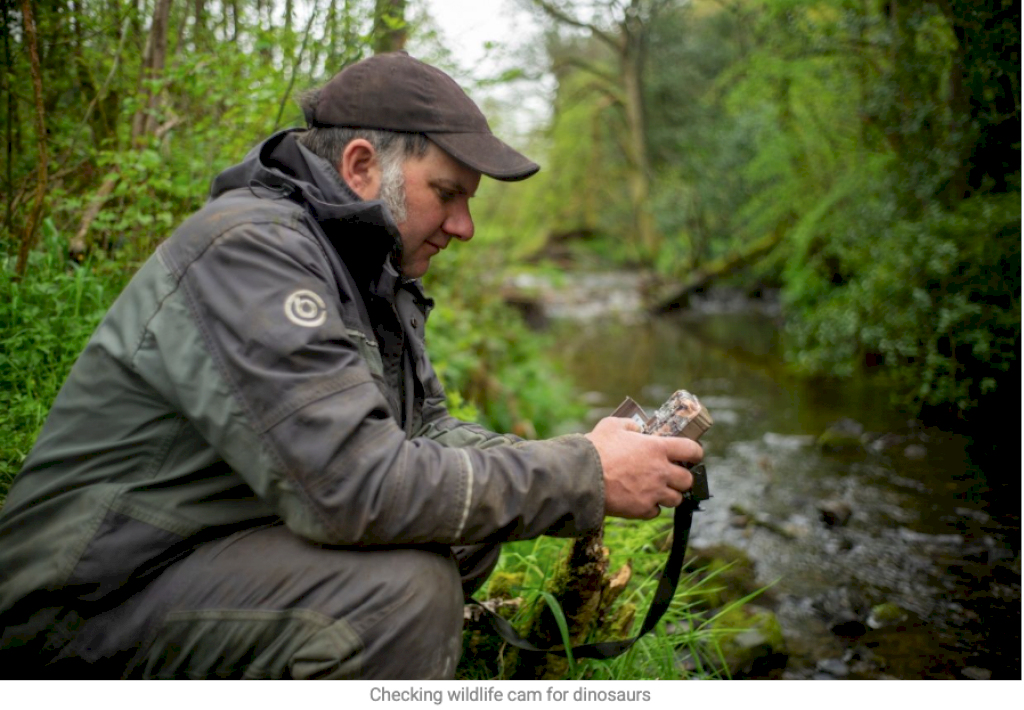
I love sharing it too, we have school visits and local groups coming for walks through the farm and down to the pond and natural beck habitat that was once just a heavily grazed wet field. On one walk, a couple of years ago, a bunch of local farmers ducked and weaved under low verdant branches covered in epiphytes, I overheard one usually dour chap exclaim “bloomin ‘eck, it’s like Jurassic Park in ‘ere!”. They all loved it and could hardly believe that it has all come in one generation.
A bit of me hopes that they go home and look differently at their farms and, if enough of a switch has been flicked, they do a little bit of something that will last well beyond their own years.
Plant a tree, lay a hedge, fence off a field corner or dig a pond. Our legacy doesn’t have to be huge or grand, it just has to be a positive one.
By James Robinson
Do take advantage of an exclusive Grapevine offer of a 3 month free trial and 40% off an annual subscription. Please click here to sign up
Grapevine is a trusted network of private members, linking kindred spirits from town or country. Members promote, sell or buy goods and services within the network.
Grapevine also believes in supporting young people to get a strong start through internships and work placements. We also help a number of charities including Heads Together and The Injured Jockeys Fund.